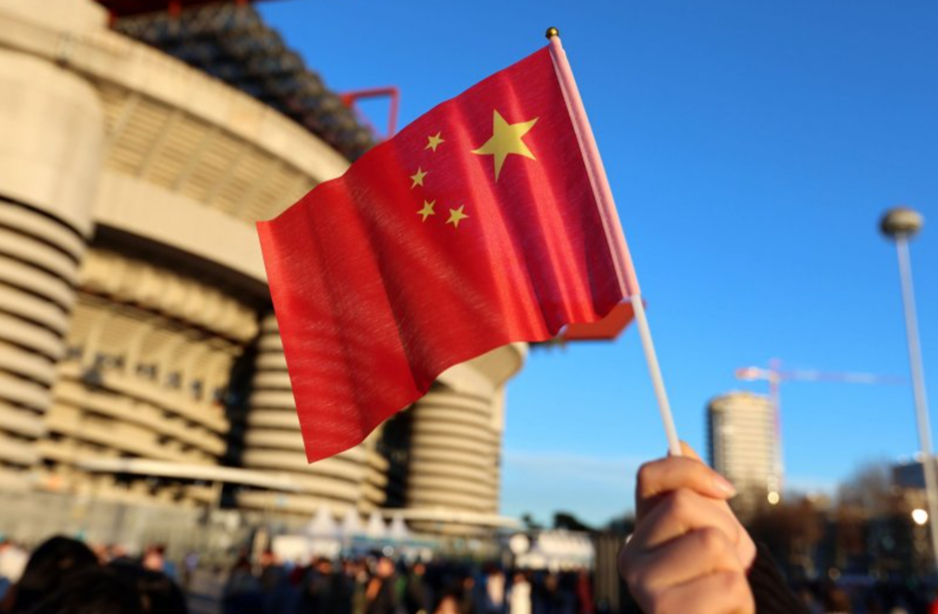
China isn't retreating in Latin America -- it's recalibrating
Feb. 20 (UPI) -- In its America First National Security Strategy, the Trump administration has signaled its intention to push back against the influence of U.S. adversaries such as China in the Western Hemisphere. Visible actions across the region have matched that policy.
Early U.S. pressure produces visible results
In Venezuela, U.S. forces captured Nicolás Maduro on January 3, 2026, in a military operation in Caracas, dramatically altering the country's political landscape. Subsequent U.S. actions targeting embargoed oil shipments and vessels linked to sanctions evasion contributed to shifts in Venezuelan oil flows, including cargoes previously destined for China.
U.S. attention to dual-use concerns involving Chinese space and astronomical facilities also influenced developments elsewhere in the region. In Chile, the government formally cancelled the planned Ventarrones astronomical observatory project in January 2026, after it had been paused in April 2025 because the agreement was found not to comply with Chilean legal requirements. Chilean officials have stated that they remain open to cooperation in space science, but only under appropriate bilateral arrangements.
In Argentina, the Milei government, in office since December 2023, declined to renew the key agreements governing the China-Argentina Radio Telescope (CART) when they expired in mid-2025, leaving the project's future uncertain. Some regional militaries have also quietly limited engagement with China's People's Liberation Army in professional education settings.
These developments create the impression that Washington's renewed focus is pushing China out of the Americas. In reality, Beijing appears to be adjusting rather than retreating, and in some cases deepening its position through commercial, technological and political networks that are less visible but structurally significant.
Commercial networks, not forward bases
For years, the principal strategic concern has not been a large Chinese military footprint in the hemisphere, but rather the networks of influence created through commerce, infrastructure, telecommunications, energy systems, digital architecture and elite exchanges. Those networks continue to expand, even among governments closely aligned with Washington.
Argentina provides a case in point. President Javier Milei, one of Washington's closest partners in the region, has acknowledged that Argentina must continue economic engagement with China. In 2025, Argentina increased soy exports to China as Beijing reduced purchases from the United States. At the same time, Buenos Aires continues to host significant Chinese lithium investment, maintains a $20 billion currency swap agreement with Beijing, and has not altered the operating status of the Chinese-managed space facility in Neuquén.
Panama, despite withdrawing from the Belt and Road Initiative and reviewing port concessions, remains economically interconnected with major Chinese firms. Chinese shipping giant COSCO remains a principal Canal user, while companies such as China Harbour and Huawei retain a significant presence in logistics, infrastructure, and telecommunications.
Peru illustrates with particular clarity how Chinese commercial networks can entangle domestic politics even as governments strengthen ties with Washington. Interim President José Jerí, who had taken office in October 2025 following the impeachment of his predecessor, accepted U.S. security assistance and welcomed an interagency delegation from the FBI and DEA in December 2025. Yet Chinese firms continued to hold major positions in Peru's mining, electricity generation, telecommunications and port infrastructure sectors, including the strategic Port of Chancay.
The following day, Congress elected José María Balcázar Zelada as president of Congress, and under Peru's constitutional line of succession, he assumed the acting presidency. Some consulted for this work fear that Balcázar, affiliated with the leftist Peru Libre party, could facilitate the return of the left in Peru's April 12 general elections, and with it, an even greater embrace of the PRC by Peru.
Brazil remains the largest destination for Chinese investment in South America. China is the principal buyer of Brazilian soybeans and meat exports, and economic interdependence between the two countries remains substantial, even as Brasília maintains dialogue with Washington.
In El Salvador, President Nayib Bukele has aligned closely with Washington on migration and security while simultaneously welcoming significant Chinese-funded infrastructure projects, including a new national stadium, a national library, and coastal development works.
In Honduras, the election of pro-Taiwan President Nasry Asfura in December 2025, won on an explicit pledge to restore diplomatic relations with Taipei, has shifted the political trajectory. Asfura met with Secretary of State Marco Rubio in January 2026 and signaled active movement toward a diplomatic reset with Taiwan. Nevertheless, the complexity of reversing China's institutional gains remains significant, and no formal diplomatic switch had occurred as of this writing.
Meanwhile, Beijing continues advancing a structured long-term strategy toward the region. China's recently released third policy white paper on Latin America outlines expanded cooperation in infrastructure, digital technologies, space collaboration and elite exchanges. These initiatives reinforce China's presence in sectors that shape economic systems, information flows and long-term political relationships.
What U.S. strategy must do next
Washington's renewed attention to the region is both necessary and welcome. It is also too early to assess the effectiveness of the current approach fully. U.S. strategy encompasses tools ranging from commercial partnerships and development financing through the U.S. Development Finance Corporation to expanded military cooperation.
Yet pressure alone has not compelled regional governments to forgo Chinese markets, capital and technology. Many states are instead pursuing diversification strategies, expanding ties not only with China but also with Europe and other partners.
Effectively managing China's influence in the Western Hemisphere will require sustained economic engagement, institutional strengthening, transparency initiatives and coordinated diplomacy with like-minded partners. This requires not only resisting malign influence but expanding positive economic engagement. It will also require credible alternatives that address the region's development needs.
The Western Hemisphere remains the United States' only geographic neighborhood. Its stability and prosperity will depend not on forcing binary choices, but on offering partnerships that are economically viable, politically sustainable and strategically consistent.