Reflections on U.S. Action in Venezuela
Jan. 13 (UPI) -- The Jan. 3 U.S. operation to capture Nicholas Maduro and subsequent U.S. actions illustrate the capabilities of both U.S. "hard power" and "soft power" when applied correctly, as well as their limits.
The successful U.S. operation was an impressive feat, reflecting not only advanced U.S. military capabilities, but also intelligence preparation, training and precise coordination.
They also understand that Maduro, like others in the past two decades captured by Western law enforcement, is likely collaborating, providing the United States with valuable information on the details of Chavista criminal schemes and bank accounts.
The remaining Chavistas have long dreamed of escaping from sanctions and legal peril, to have normalized economic and political relations with the United States without ceding real power.
This is the same group of criminals that hijacked Venezuelan democracy, who imprisoned and tortured thousands of Venezuelans and forced a mass exodus from the country, who expropriated hundreds of billions of dollars from companies operating in Venezuela, and stole the vast oil and mineral wealth of the country, while bankrupting PdVSA, once the most respected state-owned oil company in the region.
The current U.S. administration, for its part, has a strong interest in declaring victory, bolstered by symbolic cooperation of the Chavista criminal elite on issues that do not impact their core equities: reducing drug and migrant flows to the United States and reducing high-profile security cooperation with Russia, China, and Iran, while agreeing to mutually profitable deals with Administration-aligned petroleum, mining and other companies.
The likely outcome in the coming months is cooperation which will support both the U.S. administration narrative and Chavista interests, without addressing the real threats to U.S. strategic interests in the country: the lack of a truly U.S.-aligned democratic government bound by the rule of law, putting an end to the operation of terrorist and criminal gangs, radical Chavista-aligned groups, and U.S. hemispheric rivals in the country.
There will likely be an agreement to receive Venezuelans deported from the U.S. Such an agreement will be particularly cruel, handing over to the regime those who fled its authoritarianism and criminal violence.
There will likely be some counter-drug cooperation, and possibly even talk about eventual elections, rather than installing Edmundo Gonzalez and Maria Corina Machado, who demonstrably and overwhelmingly won the July 28, 2024, election.
The Chavista repressive apparatus, including its intelligence service SEBIN, as well as collectivos and other groups intimidating the population, are likely to stay.
In the oil sector, there will likely be short-term gains, including the elimination of sanctions, the cooperative sale of embargoed oil cargos to oil companies and traders connected to the U.S. administration and possibly the return of some U.S. petroleum service companies and gas sector operators to the region.
Some collaborative petroleum projects in the broader Caribbean, such as Shell's "Dragon Field," may be reactivated. It is unlikely, however, that oil companies will rush to invest the more than $100 billion required to restore the country's dilapidated infrastructure.

Astute businesspeople understand the difference between making a quick dollar from U.S. declarations of victory and promises of protection, versus putting "real money" into a country run by the same group that stole a prior generation's oil assets and defaulted on contractor payments.
"Real money" will likely not enter Venezuela while there is a complete lack of juridical stability, questions about the legal status of those signing contracts, and over $100 billion in outstanding legal claims by those whose Venezuelan assets were previously expropriated or stolen.
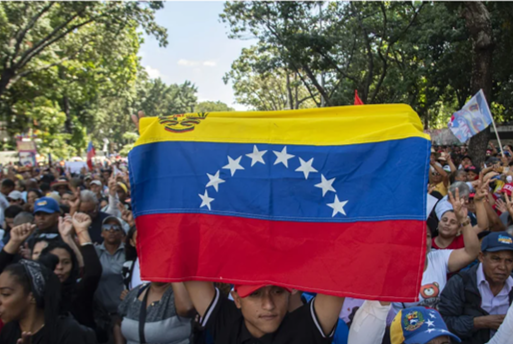
The partial lifting of sanctions, and new short-term oil activity will likely motivate some hopeful Venezuelans to return, contributing to the U.S. declaration of "success," yet others will stay away as long as the same criminal group that jailed their family members, robbed multiple elections and brutally repressed protests remain in power in Caracas, even if they are now treated by the U.S. administration as business partners or subservient vassals.
The U.S. had a historically unprecedented opportunity to restore democracy in Venezuela, bringing to power a sincerely grateful elected government that would have happily put an end to Venezuela's role as the principal host of criminality, terrorist groups and anti-United States hemispheric actors in the region.
Instead, an incredible feat of U.S. military capability has become a source of mistrust regarding U.S. intentions in the region and globally. It is a tragedy of lost opportunity for both Venezuelans and the United States.