The Impact of Chinese Organized Crime in Latin America on the Region’s Resources and Environment
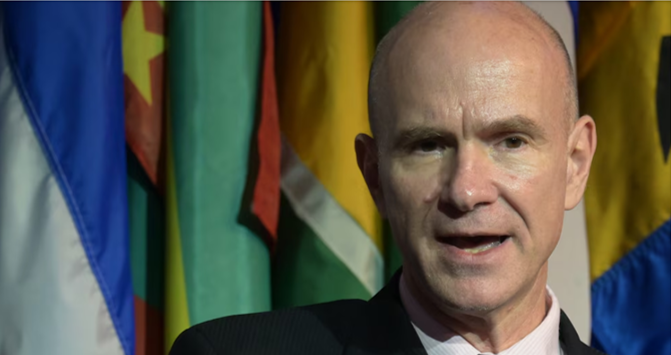
Chairman Gosar, Chairman Westerman, Ranking Member Dexter, Ranking Member Huffman, thank you for the opportunity to testify before the committee today. These are my personal views and do not necessarily represent the organizations with which I am affiliated.
Criminal activity by Chinese gangs in Latin America and the Caribbean are a serious and expanding problem for its institutions and prosperity. They also threaten its resources and environmental health. These activities are a subset of the broader challenge of organized crime in the region,[1] but are also present unique challenges due to the limited capacity of regional governments to combat crime related specifically to Chinese groups. They are also notable in terms of the damage that they cause to flora and fauna, and the poisoning of the region's ecosystems.
The principle Chinese criminal activities in the region include Illegal, Unreported and Unregulated (IUU) fishing, involvement in the entirety of the illegal mining industry, wood trafficking, illegal flora and fauna trafficking, the supply of precursor chemicals for fentanyl and other synthetic drugs, human trafficking and smuggling, arms trafficking, and trade based and other money laundering among others. Chinese illicit activities in the region involve multiple groups different sizes and levels of sophistication from familial networks, such as the Zhang cartel supplying precursor chemicals to Mexican groups, to much larger enterprises. Some of the most significant and best known, as mentioned by organized crime expert Wanda Felab-Brown in her own testimony to the Senate last month, include the 14K and Sun Yee On Triads, and the Fujian Mafia, as well as the Flying Dragons, Tai Chen, and Fuk Ching. [2]
The power of these groups and damage caused by their activities are magnified by their interactions with other criminal entities in the region, and the way they are often shielded from local law enforcement through barriers of language, community isolation> In addition, local authorities often lack information and contacts to effectively penetrate these communities and understand their linkages back to China. [3]
For this committee today, I will concentrate on those which cause particular environmental and resource damage.
With respect to IUU fishing, the estimated cost to South American economies in lost resources alone is $2.3 billion annually.[4] The Chinese deepwater fleet is the principal, albeit not the only violator of international fisheries regulations, engaged in overfishing, fishing in the exclusive economic zones of Latin American nations and maritime protected areas,[5] often with their Automated Information System (AIS) transponders turned off, or otherwise concealing their location or identity. These vessels engage in illegal types of fishing such as the use of trawl nets.[6] They often use China-based deep sea logistics ships to resupply and offload their catches to avoid having to put into ports where their cargos and equipment can be inspected, or where vessels identified by international law enforcement can be otherwise held accountable. Their activities have already caused the collapse of fisheries in Asia, put those in Africa under strain, and are currently contributing to hardships in Latin American coastal communities which depend on fishing for their livelihoods.[7]
In the illegal mining sector, Chinese entities are involved in all parts of illicit global supply chains,[8] from purchasing gold and other products at the local and global level, and also at the retail level, as well as supplying materials, tools, food and clothing to miners.[9] Through such purchasing and commercial and logistics support, they contribute significantly to the poisoning of rivers, air and other parts of the ecosystems, deforestation and other harms caused by the industry as a whole.[10]
Chinese involvement in illegal timber trafficking, although only a portion of this illegal industry, contributes to the robbery of the region’s wood resources, including rare types of trees. It also contributes to deforestation, is an enabler of illegal mining, and is often used to smuggle materials involved in other illicit activities. The Chinese company Bai Shan Lin was implicated in illegal timber exports in Guyana, among other wrongdoing, and ultimately expelled from the country.[11] In Peru, in 2021, Luis Hidalgo Okimura, Governor of the Department of Madre de Dios, was named in a major timber smuggling scandal involving Chinese entities.[12]
In wildlife trafficking, PRC demand for exotic flora and fauna is particularly significant in Mexico. That demand includes reptile skins, shark fins, Jaguar and puma skins[13] and teeth among others. It also includes butterflies, totoaba swim bladders,[14] and seahorses,[15] among others. Chinese wildlife poaching and related actions contribute to a loss of biodiversity and increase peril to endangered species. Such actions are facilitated by the de facto control of substantial territories by non-Chinese criminal entities in various Latin American countries, while the illicit revenue produced by China-related groups arguably reinforces the weakness of the local government and thus the control of these zones by other criminal groups.
With respect to narcotrafficking, the supply of precursor chemicals for synthetic drugs by PRC-based groups includes but is not limited to sending fentanyl to laboratories in Sinaloa, Mexico.[16] Chinese fentanyl precursors and the less than aggressive cooperation by the PRC government in controlling them, contributes to a multibillion-dollar illicit industry that kills an estimated 48,000 Americans per year, although that number is substantially lower than it had been in prior years.[17]
With respect to money laundering, the expansion of legitimate trade, financial and human connections between the PRC and the region, in combination with the presence of Chinese mafia groups there, has proliferated opportunities for criminal groups to hide their illicit earnings in ways that are faster, cheaper, and harder to detect.
Although groups have long laundered money through the importation of goods from the PRC,[18] since 2017, Chinese money laundering organizations supporting other criminal groups in the Western Hemisphere have become a particular problem. Indeed, the U.S. Treasury, in 2024, stated that these organizations “have become more prevalent and are now one of the key actors laundering money professionally in the United States and around the globe.”[19]
The growing options for criminal entities to launder money, with associated challenges for law enforcement, are illustrated by a recently exposed scheme “flying money.”[20] There, Mexican narcotrafficking gangs in the U.S. delivered bulk cash to Chinese mafia groups in this country. These then assigned ownership of the cash to wealthy persons in the PRC looking to get their money out of that country without its Communist government tracking the activity. Those Chinese businessmen, in turn, provided an equivalent amount of credits in RMB to criminally connected Latin American businessmen, who used it to import goods from the PRC to Latin America, thus completing the cycle of laundering their drug proceeds.
Because there was no physical transfer of money across the US border, and because the transactions involved non-transparent accounts in the PRC, this type of scheme is very difficult for authorities such as the U.S. Treasury Department or Financial Intelligence Units (FIUs) in the region to counteract.
Two years ago, Florida International University published an important study on Chinese organized crime in the region, “From Fujian to Flushing: Chinese Criminal Networks in the Americas and Beyond.”[21] In addition to the detailed information the report provides about the nature of the threat, it also highlights that these Chinese illicit networks in the region, are also connected to the U.S. Numerous PRC espionage activities in the U.S.,[22] and potential penetration and sabotage operations here like Operation Volt-Typhoon,[23] highlight how these Chinese illicit criminal networks may interface with broader PRC subversive activities across the region as a national security challenge for the U.S.
With respect to human trafficking, there is very little visibility into the activities of Chinese mafia groups in ethnic communities in the region. Anecdotal evidence suggests a racket involving substantial prepayments to move ethnic Chinese through complex networks from the PRC, through multiple Latin American countries, involving collaboration with local Chinese gangs,” and often some form of debt bondage work within Chinese communities along the route.[24]
Frequently the ultimate destination of the United States, as highlighted by the 1993 case of 286 Chinese migrants delivered to Queens, New York on the ship “Golden Venture.”[25] In 2024, more than 30,000 Chinese were intercepted crossing the southern border from U.S. into the United States.[26] This flood of persons was arguably also driven by high youth unemployment in the PRC,[27] yet it raises questions that PRC security services could have used Chinese criminal networks to smuggle agents into the U.S. for the purpose of espionage or sabotage in the context of a future conflict with the United States.[28]
I do not believe Chinese organized crime is simply a tool of the PRC government, weaponized to destabilize the United States. Nonetheless, phenomenon such as PRC government “police stations”[29] illustrate that it actively interfaces with its diaspora in the region in non-transparent and coercive ways. [30] Similarly, increasingly since 2024, the PRC trains police from the region in the PRC.[31] It has also sent its National Police agents to Argentina and elsewhere to collaborate with local governments on Chinese organized crime, including the 2013 takedown of the Pixue organization.[32]
The PRC, in its 2025-2027 China-CELAC plan, and in its most recent policy white paper toward the region,[33] has reinforced its intention to increase law enforcement collaboration and people-to-people contacts in the region.[34]
With respect to recommendations, it is important for the U.S. to increase its cooperation with law enforcement and intelligence bodies in the region, as part of the expanded prioritization of the Western Hemisphere, and increased security engagement there, as outlined by the new 2025 National Security Strategy.[35] This arguably should include strengthened intelligence sharing, particularly involving Chinese crime groups, and PRC-affiliated persons operating across the Hemisphere.
While Latin America often pushes back on U.S. pressures regarding Chinese commercial activities in the hemisphere,[36] cooperation on Chinese organized crime, if done with the correct approach and tone, could be a “win-win” for our relationship with the region, helping it to combat illicit activities which violate its sovereignty, rob its resources, destroy its environment and undercut the rule of law.
For the U.S., such expanded cooperation on organized crime not only would strengthen our own protection of resources and the environment, but also help us to better understand Chinese networks in the region that potentially impact our national security, while showcasing to our partners the harms to their own interests of improperly monitored and controlled PRC activities in the hemisphere that we share.
Thank you for your time, and that of the Committee in considering my testimony today.
---
[1] Wanda Felab-Brown, “How Chinese criminal networks fuel illicit markets across the Americas,” Brookings Institution, December 9, 2025, https://www.brookings.edu/articles/how-chinese-criminal-networks-fuel-illicit-markets-across-the-americas/.
[2] Wanda Felab-Brown, “How Chinese criminal networks fuel illicit markets across the Americas,” Brookings Institution, December 9, 2025, https://www.brookings.edu/articles/how-chinese-criminal-networks-fuel-illicit-markets-across-the-americas/.
[3] Wanda Felab-Brown, “How Chinese criminal networks fuel illicit markets across the Americas,” Brookings Institution, December 9, 2025, https://www.brookings.edu/articles/how-chinese-criminal-networks-fuel-illicit-markets-across-the-americas/.
[4] Mónica Espinoza Miralles, “Driving ocean transparency across Latin America,” Global Fishing Watch, Accessed January 17, 2026, https://globalfishingwatch.org/latin-america/.
[5] Wilder Alejandro Sanchez, “How Latin American Navies Combat Illegal, Unreported, or Unregulated Fishing,” Center for Strategic and International Studies, May 22, 2024, https://www.csis.org/analysis/how-latin-american-navies-combat-illegal-unreported-or-unregulated-fishing.
[6] “China’s ‘Predatory’ Trawler Fleet and the Fishing Industry’s Dirty Secret,” Newsweek, November 17, 2023, https://www.newsweek.com/china-fishing-fleet-industry-environment-forced-labor-1844620.
[7] “China’s Role in the Exploitation of Global Fisheries: Issues for Congress,” Congressional Research Service, April 12, 2022, https://www.congress.gov/crs_external_products/R/PDF/R47065/R47065.1.pdf.
[8] See Wanda Felab-Brown, “China-Linked Wildlife Poaching and Trafficking in Mexico,” The Brookings Institution, March 2022, https://insightcrime.org/wp-content/uploads/2023/08/FP_20220328_wildlife_trafficking_felbab_brown_compressed.pdf.
[9] Scott McDonald, “On the Trail of Suriname’s Illicit Gold Proceeds,” Global Americans, May 9, 2023, https://globalamericans.org/on-the-trail-of-surinames-illicit-gold-proceeds/.
[10] “Illegal mining crimes,” Interpol, Accessed January 17, 2026, https://www.interpol.int/en/Crimes/Environmental-crime/Illegal-mining-crimes#:~:text=Illegal%20mining%20has%20a%20devastating%20impact%20on%20the,chemicals%20used%20contaminate%20rivers%20and%20threaten%20human%20health.
[11] “BaiShanLin still owes $70M to Forestry Commission,” Guyana Times, October 15, 2020, https://guyanatimesgy.com/bai-shan-lin-still-owes-70m-to-forestry-commission/.
[12] Mark Wilson, “Peru Governor Accused in China Wood Trafficking Network,” Insight Crime, November 10, 2021, https://insightcrime.org/news/peru-governor-accused-china-wood-trafficking-network/.
[13] C.H. Gardiner, “Bolivia Bust Shows Demand for Wildlife in China,” Insight Crime, March 1, 2018, https://insightcrime.org/news/brief/bolivian-wildlife-filling-chinese-demand/.
[14] Douwe den Held, “Fish Bladders Mean Big Business for Chinese and Mexican Smugglers,” Insight Crime, April 8, 2019, https://insightcrime.org/news/brief/fish-bladder-big-business-china-mexico-smugglers/
[15] Max Radwin, “Latin America’s Bustling Trade in Seahorses to China,” Insight Crime, February 27, 2021, https://insightcrime.org/news/latin-americas-bustling-trade-in-seahorses-to-china/.
[16] Parker Asmann, Steven Dudley and Victoria Dittmar, “What’s Missing From the US-China Fentanyl Agreement,” Insight Crime, November 4, 2025, https://insightcrime.org/news/missing-us-china-fentanyl-agreement/.
[17] Karl Hille, “Fentanyl pipeline snapped: Why overdose deaths are plummeting in Maryland and US,” The Baltimore Sun, January 15, 2026, https://www.yahoo.com/news/articles/fentanyl-pipeline-snapped-why-overdose-213800332.html.
[18] Arron Daugherty, “Colombians Charged in Massive China-based Money Laundering Scheme,” Insight Crime, September 11, 2015, https://insightcrime.org/news/analysis/colombians-charged-china-drug-money-laundering-scheme/.
[19] “Chinese Money Laundering Networks,” Congressional Research Service, January 8, 2026, https://www.congress.gov/crs_external_products/R/PDF/R48786/R48786.1.pdf.
[20] Giovanni Legorano, “Chinese money brokers ‘launder $312bn for cartels’” The Banker, September 4, 2025, https://www.thebanker.com/content/7ccd2c3b-336f-4393-a9b2-2da7c040a190.
[21] Leland Lazarus, Myah Havertong, Javier Alvarez Kuan, Nicole Writt, Nicole, “From Fujian to Flushing: Chinese Criminal Networks in the Americas and Beyond,” Florida International University, 2024, https://digitalcommons.fiu.edu/record/19465?ln=en&v=pdf.
[22] “Survey of Chinese Espionage in the United States Since 2000,” Center for Strategic and International Studies, Accessed January 17, 2026, https://www.csis.org/programs/strategic-technologies-program/survey-chinese-espionage-united-states-2000.
[23] Rebecca Picciotto, “FBI shuts down China’s ‘Volt Typhoon’ hackers targeting U.S. infrastructure,” CNBC, January 31, 2024, https://www.cnbc.com/2024/01/31/fbi-shut-down-china-volt-typhoon-hackers-targeting-us-.html?msockid=13064d534ac16d70195e5b854b996c39.
[24] Leland Lazarus and Alexander Gosco, “Triads, Snakeheads, and
Flying Money,” Florida International University, August 2023, https://digitalcommons.fiu.edu/record/19453?ln=en&v=pdf.
[25] Patrick Radden Keefe, The Snakehead: An Epic Tale of the Chinatown Underworld and the American Dream (Doubleday, July 2009).
[26] R. Cort Kirkwood, “CBP Data: 30K Chinese ‘Migrants’ Encountered at Border in Fiscal 2024,” The New American, February 15, 2024, https://thenewamerican.com/us/immigration/cbp-data-30k-chinese-migrants-encountered-at-border-in-fiscal-2024/_pdf/.
[27] “A Closer Look at Causes of Youth Unemployment in the People’s Republic of China,” ADB Briefs, No. 247, June 2023, https://www.adb.org/sites/default/files/publication/890896/adb-brief-247-causes-youth-unemployment-prc.pdf.
[28] R. Evan Ellis, Toward a More Effective DoD Contribution to Strategic Competition in the Western Hemisphere (Carlisle Barracks, PA: U.S. Army War College Strategic Studies Institute, February 24, 2025), https://press.armywarcollege.edu/monographs/975/.
[29] “Full List of China’s Unofficial Police Stations Around the World,” Newsweek, December 5, 2022, https://www.newsweek.com/china-overseas-police-service-center-public-security-bureau-safeguard-defenders-transnational-crime-1764531.
[30] Wanda Felab-Brown, “How Chinese criminal networks fuel illicit markets across the Americas,” Brookings Institution, December 9, 2025, https://www.brookings.edu/articles/how-chinese-criminal-networks-fuel-illicit-markets-across-the-americas/.
[31] “2025 Conference of Global Public Security Cooperation Forum opens in east China,” The State Council, the People’s Republic of China, official website, September 17, 2025, https://english.www.gov.cn/news/202509/17/content_WS68caaf45c6d00fa19f7a286e.html.
[32] “Chinese police bust criminal gangs in Argentina,” China Daily, February 28, 2013, https://www.chinadaily.com.cn/china/2013-02/28/content_16262536.htm.
[33] “Full text: China's Policy Paper on Latin America and the Caribbean,” The State Council, the People’s Republic of China, official website, December 10, 2025, https://english.www.gov.cn/news/202512/10/content_WS693962c3c6d00ca5f9a08069.html.
[34] R. Evan Ellis, “China’s 2025 White Paper on Latin America Sets the Stage for Renewed Competition With the US,” The Diplomat, December 16, 2025, https://thediplomat.com/2025/12/chinas-2025-white-paper-on-latin-america-sets-the-stage-for-renewed-competition-with-the-us/.
[35] “The National Security Strategy of the United States,” The White House, official website, November 2025, https://www.whitehouse.gov/wp-content/uploads/2025/12/2025-National-Security-Strategy.pdf.
[36] Brenda Estefan, “Latin America’s China Ties Won’t Be Easily Severed,” America’s Quarterly, February 24, 2025, https://www.americasquarterly.org/article/latin-americas-china-ties-wont-be-easily-severed/.